Giveaways are one of the fastest ways to grow on Instagram. They are also one of the easiest ways to get a post pulled or an account restricted, because most creators run them on instinct instead of reading the actual rules.
The good news: Instagram giveaways are fully allowed in 2026. Meta publishes clear promotion guidelines, and the requirements are short. The problems start when creators add entry steps that look like engagement bait, skip the legal disclaimer, or treat a giveaway like a way to buy follows.
Here is exactly where the line sits, and how to run a giveaway that grows your account without putting it at risk.
Instagram giveaway rules come in three layers
A giveaway on Instagram is governed by more than just Instagram. Three separate rule sets apply at once.
The first is Instagram's own Promotion Guidelines, which cover how you can ask people to enter. The second is Meta's Community Standards, specifically the spam policy, which governs what you can offer in exchange for engagement. The third is the law where your entrants live, which covers sweepstakes and prize promotions.
Most creators only think about the first one. The bans and takedowns usually come from the second.
Instagram promotion guidelines 2026 (official Meta rules)
When people search for "Instagram promotion guidelines," "Meta giveaway rules," or "official Instagram contest rules," they are looking for the same short document Meta publishes under Promotion Guidelines. Contests, sweepstakes, and giveaways are all treated as promotions. The rules do not change by prize size.
Meta's official promotion guidelines for Instagram require you to:
- Operate the promotion lawfully in every country where people can enter
- Publish official rules covering how to enter, who is eligible, the prize, and how winners are chosen
- State eligibility (age, residency, and any exclusions) clearly before people enter
- Release Instagram / Meta with the disclaimer that the platform does not sponsor, endorse, administer, or associate with your promotion
That is the full official checklist. Everything else you hear about "Instagram giveaway rules" is either a restatement of those four points, or it comes from Meta's spam policy (covered below), not from the promotion guidelines themselves.
| Official Meta rule | Allowed | Not allowed |
|---|---|---|
| Follow to enter | Yes | — |
| Comment a keyword to enter | Yes | — |
| Tag a friend | Yes | Tag yourself in a photo you are not in |
| Share to Stories | Yes | Require a feed share as entry |
| Like the post | Yes | Offer cash or a prize as a direct trade for likes/follows |
| Link to full official rules | Yes | Skip rules and only post "comment to win" |
If you need the exact disclaimer text and a full rules document you can paste into a caption or Google Doc, use the copy-paste Instagram giveaway disclaimer template and the giveaway rules template. This post is the policy layer. Those posts are the ready-to-use copy.
To skip the editing entirely, our free Instagram giveaway rules generator builds both pieces around your prize, dates, and eligibility — a short caption disclaimer and the full official rules, with Meta's required release already in place. It runs in your browser, with no sign-up.
What Meta requires you to include
Instagram's promotion guidelines ask you to do four things. They are simple, and skipping them is the most common reason a giveaway post gets reported and removed.
| Requirement | What it means |
|---|---|
| Run it legally | Follow the prize and sweepstakes laws in your entrants' countries |
| Include official rules | State how to enter, who can win, and how the winner is chosen |
| State eligibility | Any age or country restrictions must be clear |
| Release Instagram | A disclaimer confirming Instagram is not involved |
The required Instagram giveaway disclaimer
The release is the one creators forget. Meta's guidelines require you to acknowledge that the promotion is not sponsored, endorsed, administered by, or associated with Instagram. The standard wording is:
This promotion is in no way sponsored, endorsed or administered by, or associated with, Instagram.
You can put it in the caption or link to a rules page. Either is fine. Leaving it out is what gets a post flagged.
Two things the disclaimer does not cover. It does not satisfy local sweepstakes law — lines like "no purchase necessary" come from the laws where your entrants live, not from Instagram, so check the first rule set too. And it is per-promotion, not per-account: a disclaimer in your bio or an old post does not carry over. Include it with every giveaway you run.
What's allowed for entry
This is where creators worry most, and where the rules are actually generous.
Follow-to-enter is allowed, and adding a follow gate that confirms the follow before delivering the entry is a clean way to handle it. Asking people to comment is allowed. Asking them to tag a friend is allowed. Asking them to share your post to their Story is allowed. These are the standard mechanics, and Meta does not ban any of them outright.
What you cannot do is ask people to tag themselves or others in content inaccurately. The classic banned example is "tag yourself in this photo to enter" when the person is not in the photo. That specific instruction violates the guidelines.
You also cannot require people to share your post to their own feed as a condition of entry. Story shares are fine. Feed shares as a requirement are not.
What actually gets accounts banned
Here is the part that matters most, because it is not in the giveaway guidelines at all. It is in Meta's spam policy.
Meta prohibits offering cash or cash equivalents in exchange for engagement. It also prohibits offering anything of monetary value in exchange for engagement. The policy's own example is telling: "If you like my page, I will give you an iPhone." That phrasing, framed as a direct trade of a prize for a like or follow, is exactly what the spam policy targets.
This puts giveaways in a strange spot. A prize giveaway is, by definition, offering something of value to people who engage. The way creators stay on the right side of it is structure: a giveaway with real rules, a random winner, and a clear chance to win reads as a promotion. A post that says "follow and like and I'll send the winner cash" reads as buying engagement.
The difference Meta cares about is whether you are running a legitimate promotion or paying for likes and follows with a prize. Keep it the former.
The follow-gate reach problem
There is a newer issue in 2026 that is not about bans at all. It is about reach.
Instagram's ranking systems now treat follow-gated and like-gated actions as low-intent engagement. Comments left purely to enter a giveaway, follows that come only for a prize, and mass-tagging are increasingly read as weak signals. The post can still run, but its distribution can be suppressed.
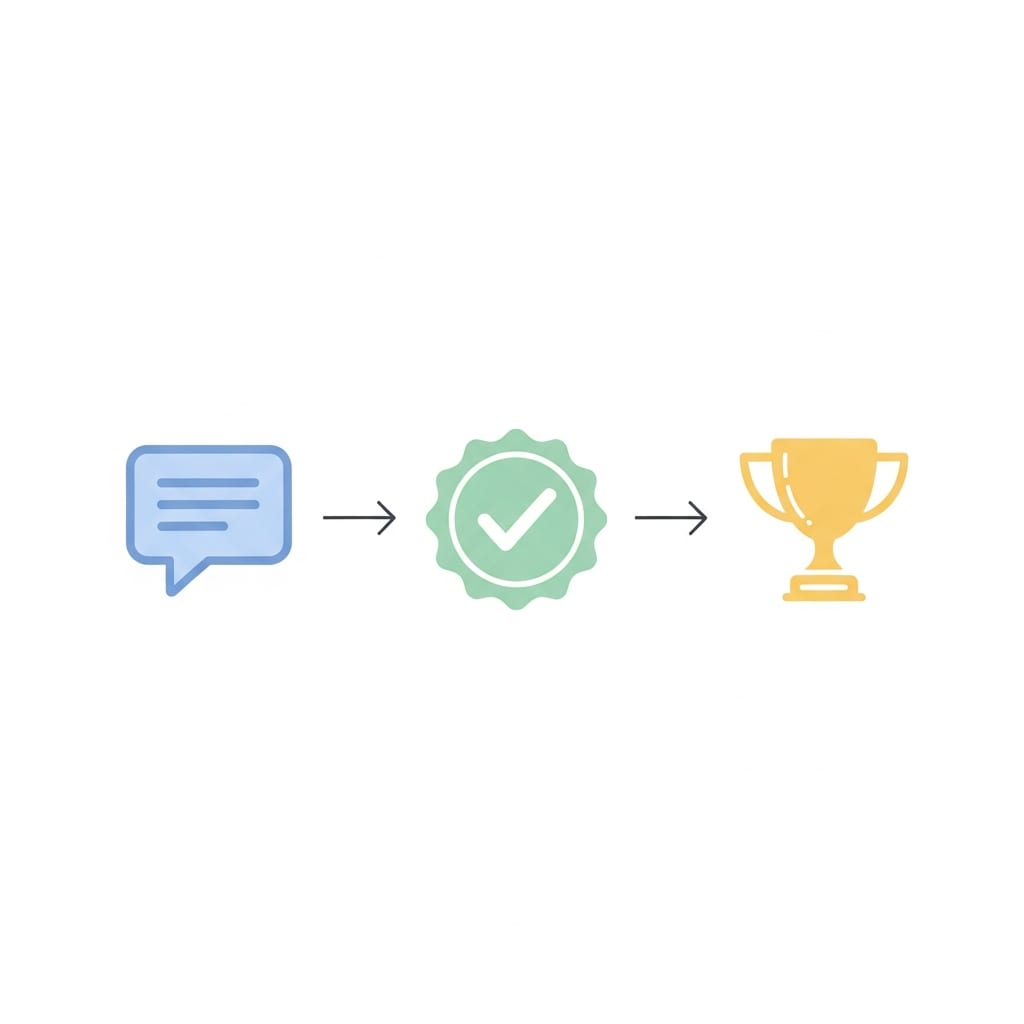
The practical effect is that a giveaway built entirely on "follow, like, tag three friends" can underperform a simpler one. Entries that require a small amount of genuine intent, like commenting a specific keyword tied to the prize, tend to hold up better. This is also why comment-to-DM automation works well for giveaways: the keyword comment is a higher-intent signal than a mass tag.
A compliant giveaway checklist
Before you publish, run through this:
- Official rules are written down, in the caption or a linked page
- The Instagram release disclaimer is included word for word
- Eligibility is stated, including any age or country limits
- Entry does not require feed shares or inaccurate tagging
- The prize is framed as a chance to win, not a direct trade for a like or follow
- The winner is chosen fairly, and you can show how
If all six are true, you are running the kind of promotion Meta's guidelines were written to allow.
What to do next
Pick entry mechanics that are both compliant and high-intent. A keyword comment that triggers an automatic entry is cleaner than a pile of tag-three-friends requirements, and it gives you a record of who entered and how to reach them.
Write your rules once and reuse them. Most of the disclaimer and eligibility language is identical from campaign to campaign, so a saved template removes the step creators most often skip. Once the entry mechanics are compliant, you can layer growth on top, like turning each entrant into a promoter with referral links in a viral giveaway, and it helps to know Meta's wider DM automation rules before you automate the entry flow.
FAQ
Are Instagram giveaways still allowed in 2026?
Yes, Instagram giveaways are fully allowed in 2026 and Meta publishes clear promotion guidelines for them. Problems start when creators add entry steps that look like engagement bait, skip the required Instagram release disclaimer, or frame the prize as a direct trade for likes and follows.
What are Instagram's official promotion guidelines for giveaways?
Meta's Instagram promotion guidelines require four things for every contest or sweepstakes: run it legally, publish official rules, state eligibility (age and country), and include a disclaimer that Instagram does not sponsor or administer the promotion. Follow-to-enter, comments, friend tags, and Story shares are allowed. Inaccurate photo tags and required feed shares are not.
What disclaimer does Instagram require for a giveaway?
Meta requires you to acknowledge that the promotion is not sponsored, endorsed, administered by, or associated with Instagram. The standard wording is: "This promotion is in no way sponsored, endorsed or administered by, or associated with, Instagram." You can put it in the caption or link to a rules page, and leaving it out is the most common reason a giveaway post gets flagged.
Can you require people to follow you to enter an Instagram giveaway?
Yes, follow-to-enter is allowed, along with asking for comments, tagging a friend, and sharing your post to Stories. What you cannot do is require feed shares as a condition of entry or ask people to tag themselves in content inaccurately, like tagging themselves in a photo they are not in.
What gets an account banned when running Instagram giveaways?
Bans usually come from Meta's spam policy, not the giveaway guidelines. Meta prohibits offering cash, cash equivalents, or anything of monetary value as a direct trade for engagement, with its own example being "if you like my page, I will give you an iPhone." A giveaway with real rules, a random winner, and a clear chance to win reads as a legitimate promotion instead.
What are the Instagram giveaway rules in 2026?
Instagram's 2026 giveaway rules require four things: run the promotion legally, include official rules covering entry method, prize, and winner selection, state eligibility requirements, and include the required disclaimer that the promotion is not sponsored or administered by Instagram. All four apply to every giveaway regardless of prize value.
Can I copy and paste Instagram giveaway rules?
Yes. The required Instagram disclaimer is always the same verbatim text: "This promotion is in no way sponsored, endorsed or administered by, or associated with, Instagram." You can copy it directly. The rest of the rules follow a standard template that you adapt per campaign — entry method, eligibility, prize description, and winner selection.
Do I need official rules for an Instagram giveaway?
Yes. Meta's promotion guidelines require a complete set of rules covering how to enter, who can win, and how the winner will be chosen. For small creator giveaways, a short caption with the entry steps plus the disclaimer satisfies this. For prizes over roughly $100, a full rules document is recommended to protect you if a participant disputes the outcome.
UnlockDM runs comment-to-DM giveaways around a single keyword, with a built-in follow gate and a fair winner picker, so entries stay compliant and you keep a clean record of everyone who joined.