Every creator wants the same thing from Instagram: reach beyond the people who already follow them. In 2026 that reach is decided by a set of ranking systems that reward one behavior above almost all others. Content that people quietly send to a friend.
The algorithm is not a mystery and it is not out to get you. It is a prediction engine trying to guess what each person wants to see next. Once you understand what it measures, the strategy stops being guesswork. Here is how it actually works this year.
Instagram is not one algorithm
The first thing to unlearn is the idea of a single algorithm. Instagram runs separate ranking systems for Feed, Reels, Stories, and Explore, and each one is tuned to how people use that surface.
Feed leans on who you interact with most and how recent and relevant a post is. Stories rank by whose Stories you actually watch and reply to. Explore is built almost entirely for discovery, so it weighs your activity on posts from accounts you do not follow yet. Reels rank on how long you watch, whether you rewatch, and whether you share.
That means there is no universal trick. Optimizing for the surface you are posting to beats chasing one formula for everything.
The three signals that matter most in 2026
Instagram head Adam Mosseri has repeatedly narrowed the list down to three signals that carry the most weight. Watch time, sends per reach, and likes per reach.
| Signal | What it measures | Weight in 2026 |
|---|---|---|
| Watch time | Total seconds spent on your content, including rewatches | Highest overall |
| Sends per reach | Share of viewers who DM your post to someone | Strongest for new reach |
| Likes per reach | Share of viewers who like it | Weakest of the three |
Watch time sits at the top because it is the clearest sign that content held attention. But the signal that changed the game this year is the one in the middle.
Why sends per reach is the signal to design for
Sends per reach is the percentage of people who saw your post and then shared it privately in a DM. Mosseri has called it one of the most important signals Instagram uses, and the guidance he gives creators is blunt: think about creating something people want to send to a friend.
The numbers behind it are the reason this matters so much. A send is estimated to carry three to five times more weight than a like when Instagram decides whether to push your content to people who do not follow you. A like is a shallow, low-cost tap. Sending a post to someone is a personal endorsement, and the algorithm reads it as proof the content is worth spreading.
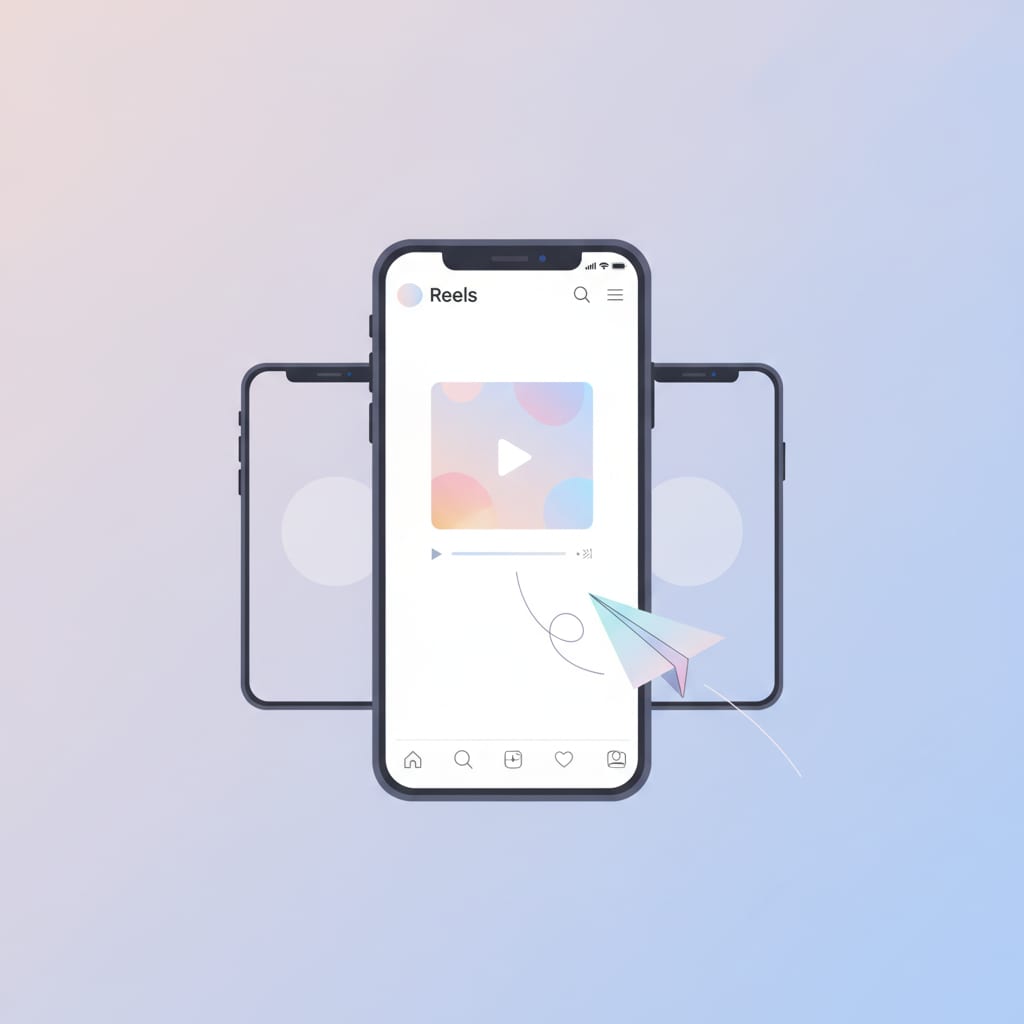
This reframes what "engagement" even means. Chasing likes is chasing the weakest of the three primary signals. The real question to ask before you post is whether anyone would tap the paper-plane icon and send this to a specific person. Saves work similarly, but private sends are the stronger distribution trigger because they signal real connection.
Content that earns sends is usually one of a few things. Genuinely useful (a tip someone wants to save for a friend), relatable enough to tag a person, or surprising enough to be worth a reaction. If you already run keyword campaigns, the same instinct applies to your comment CTA copy: the post has to be worth acting on, not just scrolling past.
What changed with Reels
Reels saw the biggest mechanical change in 2026. Instagram moved away from the old view count that triggered at 3 seconds and now measures total watch time and replay rate instead.
The practical effect is that a 15-second Reel watched three times, for 45 seconds of total watch time, now outranks a 60-second Reel watched once. Shorter, rewatchable content wins. This rewards tight hooks and loops over padding a video to hit some imagined length.
At the same time, longer Reels up to three minutes can now reach non-followers through recommendations, so there is room for depth when the topic earns it. The rule is not "make everything short." It is "earn every second." If you are building a funnel off Reels, the Reels to DM strategy still holds, but the top of it now lives or dies on watch time and rewatches.
Original content only: the repost penalty
The other major shift is a hard line on recycled content. As of 2025 into 2026, accounts that post 10 or more reposts within a 30-day window can be excluded from recommendations entirely.
Excluded means what it sounds like. That content will not appear on Explore, will not show in the Reels feed for non-followers, and will not surface in suggested posts. The visible TikTok watermark is the classic tell, but the system is broader than that. It is looking for content that was clearly made for another platform and dropped onto Instagram unchanged.
Mosseri also published a year-end memo signaling that Instagram would prioritize raw, real, human content over AI-generated material through 2026. The takeaway for creators is the same either way. Original, made-for-Instagram content is the price of entry for reach, and reposting a feed full of borrowed clips is now an active liability.
Your Algorithm: users can now steer their own feed
A quieter change is worth knowing about because it affects how your content is filtered. Instagram now gives every user a dashboard called "Your Algorithm," found under Settings and Content Preferences, showing the topics it believes each person cares about.
Users can add topics they want more of and remove categories they are tired of. That means the "interests" signal is no longer just inferred from behavior. People are telling Instagram directly. For creators, this is a nudge toward being clearly about something. An account with a sharp, consistent topic is easier for both the system and the user to file under the right interest.
What to actually do
The signals point to a short list of things that move the needle in 2026.
Make content people want to send. Before posting, ask if a viewer would DM this to a specific person. If the answer is no, the reach ceiling is low no matter how polished it looks.
Optimize for the surface. Write hooks and loops for Reels, post timely and relevant to your close audience for Feed, and give people a reason to reply on Stories.
Keep it original. Do not lean on reposts. Even light editing and a made-for-Instagram framing beats a raw cross-post.
Watch the right metric. Track sends and saves, not just likes. If you run campaigns, pay attention to which posts drive DMs and replies, since DM funnel metrics tell you far more about distribution potential than a like count does.
Turn engagement into a conversation. A comment or a DM reply is a deeper signal than a tap. Campaigns that get people to comment a keyword and then move into a DM, which is the core of comment-to-DM automation, create exactly the kind of active engagement the algorithm reads as valuable.
FAQ
What is the most important Instagram ranking signal in 2026? Watch time is the top signal, but sends per reach is close behind and matters most for reaching new people. Adam Mosseri has said sends carry roughly 3 to 5 times more weight than likes when deciding whether to push a post to non-followers.
What does sends per reach mean on Instagram? Sends per reach is the percentage of people who saw your post and then shared it to someone in a DM. It signals that content is worth passing on, so Instagram treats a high send rate as strong evidence to recommend the post on Explore and in the Reels feed.
Does Instagram have one algorithm or several? Several. Feed, Reels, Stories, and Explore each rank content with their own system tuned to how people use that surface. Optimizing for the surface you are posting to matters more than chasing one universal formula.
Does reposting content from TikTok hurt your Instagram reach in 2026? Yes. Accounts that post 10 or more reposts within a 30-day window can be excluded from recommendations, meaning that content will not show on Explore, in the non-follower Reels feed, or in suggested posts. Original content is prioritized.
How do I get my Reels to reach non-followers in 2026? Focus on total watch time and rewatches rather than the old 3-second view count. Short, rewatchable Reels that people finish and share travel furthest. A 15-second Reel watched three times can outrank a 60-second Reel watched once.
The algorithm rewards content people act on, not content people scroll past. UnlockDM helps creators turn that action into a real conversation: someone comments your keyword, gets an instant DM, and moves from a passive viewer into an engaged one. It runs on the official Meta API.