
The first unlock feels like proof the whole thing works. You launch a comment-to-DM campaign, someone comments the keyword, the reward lands in their inbox within seconds, and it is genuinely satisfying. The system did exactly what you built it to do.
Then, a day or two later, it goes quiet. The comments slow to a trickle. The unlocks stop. You are left wondering whether the offer was wrong, the Reel underperformed, or the audience just was not interested.
None of those is usually the cause. The campaign stalled because of how it was built, not what was in it. A standard comment-to-DM flow is a one-shot transaction, and a one-shot transaction has nowhere to go after it completes.
The Flow That Ends At Delivery
Walk through what a basic comment-to-DM campaign actually does. Someone comments a keyword. The system sends a DM with the reward. Done.
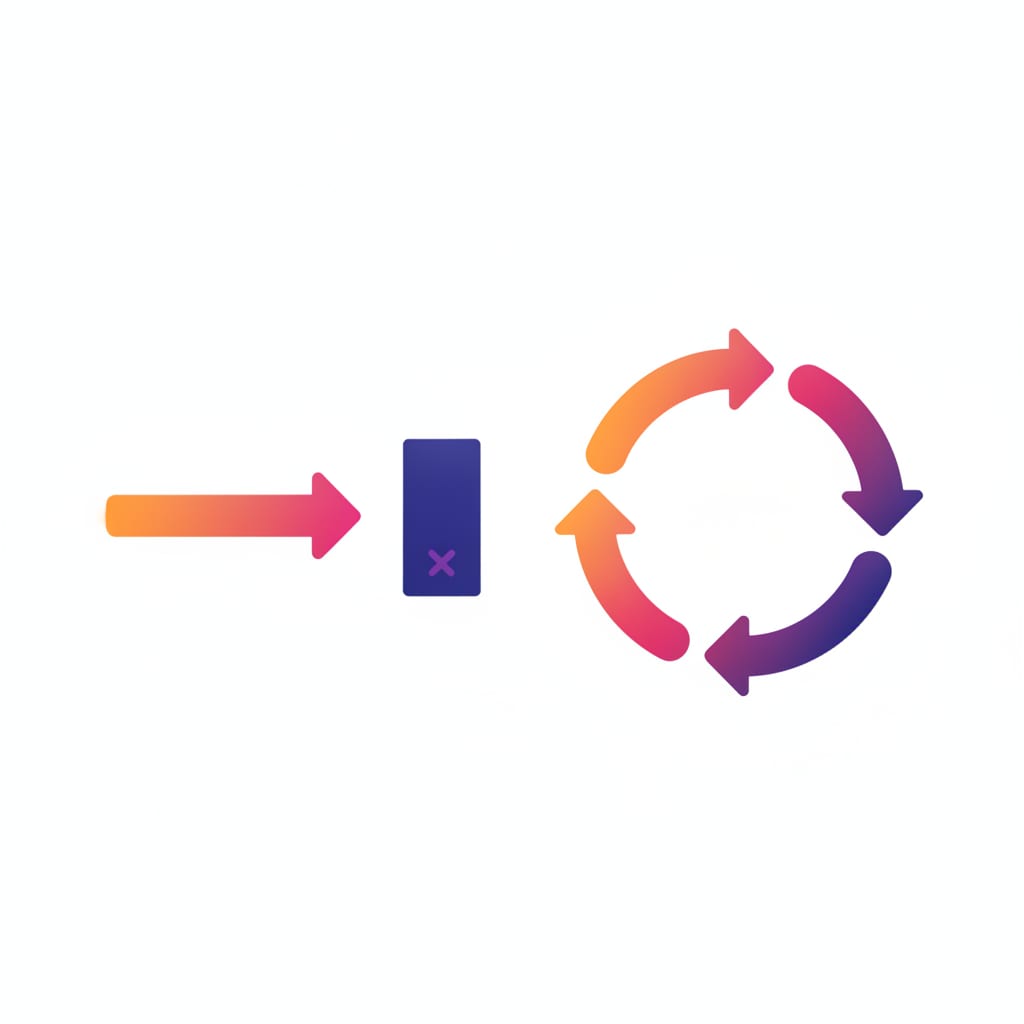
That is the entire loop, and it is not a loop at all. It is a straight line with an endpoint. The person gets what they came for and the interaction is over. Nothing in the flow asks them to do anything else, and nothing reaches back out to them later.
This is fine if your only goal is delivering a file. It is a problem if your goal is growth, because a straight line can only serve as many people as see the original post. Your ceiling is one post's reach, and that ceiling is lower than it used to be.
Why Reach Alone Runs Out
Organic reach on Instagram has been shrinking for years. For accounts under 100,000 followers, average reach dropped from around 12 percent in 2023 to about 6.8 percent in 2026. A post reaches a slice of your audience in the first day or two, and then the algorithm moves on.
That decay curve is the real reason your campaign stalls. Comments cluster in the first 24 to 48 hours while the post is still being served, then fall off a cliff as reach dies. If your campaign has no mechanism beyond "comment on this post," it dies on the same curve the post does.
You can fight this by posting more, but that is a treadmill. Every new campaign starts from zero and depends on the algorithm handing you fresh reach you do not control. The creators who escape the treadmill do not just chase more reach. They build campaigns that generate their own.
The Missing Ingredient: A Second Action
The fix is simple to describe and easy to skip: give the person a second action the moment the reward lands.
The reason this matters is timing. The person who just unlocked your reward is, right then, the warmest audience you have. They watched your content, decided they wanted something, took a public action to get it, and received value. That is the ideal moment to ask for one more small thing, because trust and momentum are at their peak.
Most funnels waste this moment completely. They deliver the reward and go silent, exactly when the person is most willing to keep going. A second action captures that willingness before it fades. There are two second actions that turn a stalling campaign into a self-sustaining one.
Loop One: The Referral Trigger
The strongest second action is a referral trigger. Instead of ending at delivery, the flow hands the person a unique link and a reason to share it: a bonus reward they unlock when a friend comments and joins the same campaign.
This changes the geometry of the whole thing. In a straight-line funnel, one comment produces one unlock and stops. In a referral loop, one unlock can produce several new comments, each of which produces another unlock, each of which hands out another referral link. The campaign stops depending only on the original post's reach, because participants are now bringing people in themselves.
This is the same mechanic that makes referral marketing for creators compound instead of decay. Every entrant becomes a distribution channel. A campaign with a working referral loop keeps generating comments long after the launch post's reach has died, because the growth is coming from participants, not from the algorithm. For a concrete, step-by-step rebuild of a campaign that had the comments but not the loop, see how one creator fixed a 400-comment post with no referral loop.
Loop Two: Broadcast to Past Participants
The second action does not have to happen only at delivery. It can happen weeks later, because a comment-to-DM campaign quietly builds an asset most creators never use: a list of everyone who participated.
Everyone who unlocked a reward came in through the same campaign, which means you have a defined audience of people who already engaged with you and got value. A broadcast to past participants lets you message that whole group again when you have a new drop, a new bonus, or a new launch.
This is fundamentally different from hoping the algorithm shows your next post to the right people. You are reaching an audience that already raised their hand, so a new campaign does not have to start from zero. The first campaign builds the list, and every campaign after it can activate the list before relying on fresh reach. It turns a series of disconnected posts into a compounding relationship, which is the whole point of a Reels-to-DM strategy that runs for months instead of days.
Designing the Second Action So People Take It
A second action only works if it is easy and worth it. A few principles keep it from becoming its own leak.
Keep the ask small. "Share this link with one friend who needs this" is light. "Refer five people to unlock" is a wall most people will not climb on the first ask. Start with a threshold of one to three referrals for the bonus.
Make the bonus genuinely better than the base reward, not a token. If the free reward is a checklist, the referral bonus might be the full template pack or a private resource. The gap between the two is what makes sharing worth the effort.
Deliver it in the same DM flow, with no new app or page. The referral link and the bonus should arrive right after the base reward, in the inbox, so the person never leaves the conversation to participate.
What to Measure
If your campaigns keep stalling, the numbers to watch are not comments and likes. They are the ratios that reveal whether a second action is happening at all.
Track unlocks per campaign, referrals generated per unlock, and how many new unlocks came from referrals versus the original post. A referral-per-unlock number near zero means your funnel is still a straight line, no matter how good the launch looked. Watching these funnel metrics is the only way to see the stall coming before the campaign goes quiet.
The first unlock is not the finish line. It is the moment the real campaign is supposed to begin.
FAQ
Why does my comment-to-DM campaign slow down after the first day?
Because the funnel ends at delivery. A standard comment-to-DM flow gives one reward for one comment and then stops, so growth is capped by the reach of a single post. When the post's reach decays after 24 to 48 hours, new comments dry up and the campaign goes quiet.
How do you keep a comment-to-DM campaign going after the reward is sent?
Add a second action to the delivery. The most effective is a referral trigger: the person who just unlocked the reward gets a link that unlocks a bonus when a friend joins. Each unlock then recruits new commenters, so the campaign feeds itself instead of ending at the first reward.
What is a referral trigger in a DM funnel?
A referral trigger is a step added after the reward is delivered. It gives each participant a unique link and a bonus they earn by bringing a friend into the same campaign. It turns a one-way delivery into a loop, where every new unlock can produce more comments and more unlocks.
Can you re-engage people who already unlocked a reward?
Yes, with a broadcast to past participants. Because everyone who unlocked came in through the same campaign, you can message that audience again about a new drop or bonus. It reactivates people who already trust you instead of relying only on new reach from a fresh post.
UnlockDM is built around the second action: every comment-to-DM campaign can include an automatic referral trigger and a broadcast to past participants, so the loop keeps running after the first unlock instead of dead-ending there.