Most product launches fail the same way. The creator builds something, posts once or twice to announce it, then opens the cart to silence.
It's not a product problem. It's a timing problem. The people who would buy haven't had time to warm up to the idea, and there's no system collecting interest before launch day arrives.
A waitlist built through Instagram DM automation solves this directly.
What a DM Waitlist Actually Does
An Instagram DM waitlist is a list of people who raised their hand before you launched. They didn't buy yet, but they told you they're interested, and they gave you permission to follow up.
The mechanics are simple: someone comments a keyword on your post or replies to your story, your automation sends them a DM, and they're on the list. No form fills. No email verification. No leaving the app.
The reason this works better than a traditional email waitlist comes down to reach. Instagram DMs average 88 to 90 percent open rates. Email sits around 25 percent. That gap is the difference between your launch message being seen and not being seen.
The Baseline Flow
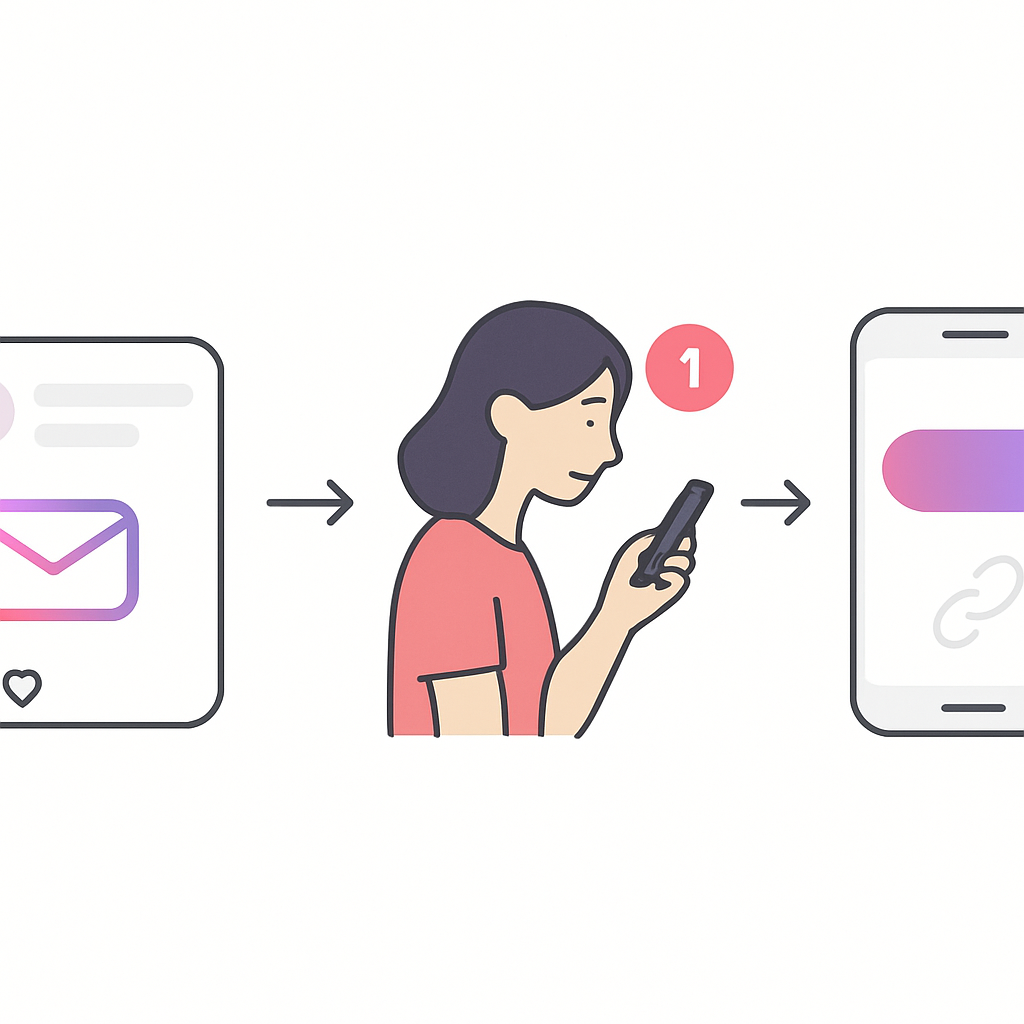
Every DM waitlist campaign has four moving parts:
The trigger post. A reel, carousel, or story that names the product and asks people to comment a specific keyword. "Comment LAUNCH and I'll send you early access details" is the template. The keyword tells the automation who raised their hand.
The first DM. Sent automatically within seconds of the comment. Keep it short: confirm what they'll get, say when it drops, and ask one qualifying question if you have one. Don't sell yet.
The list itself. Every person who completes the DM flow is captured. If your automation integrates with a CRM or email provider, you can also collect their email here. If not, they stay as a segmented DM thread you can message again on launch day.
The launch DM. Sent when you open the cart. This is the message with the link. Because it's going to people who asked for it, open rates stay high and reply rates do too.
Setting Up the 14-Day Warm-Up
You don't need to post every day, but you do need to post intentionally. Here's a simple timeline.
| Days | Content focus | Goal |
|---|---|---|
| 14 to 8 | Frame the problem | Build relatability, grow the right audience |
| 7 to 4 | Show proof | Case studies, results, testimonials |
| 3 to 1 | Announce the waitlist | Post the keyword trigger, state what they get |
| Launch day | Open the cart | Send DM to waitlist with the link |
| +24 to 48h | Follow up | DM non-clickers with a reminder |
Days 14 to 8: frame the problem. Post content that describes the exact problem your product solves. No product mention yet. Just the problem. People who relate will follow you, save the post, or reply, and that engagement tells the algorithm to show your launch content to the same people later.
Days 7 to 4: show proof. This is case studies, screenshots, testimonials, or before-and-after results. Concrete evidence that the problem is solvable. Still no "buy this." Just "this is possible."
Days 3 to 1: announce the waitlist. This is when you post the keyword trigger and tell people what they're signing up for. Be specific: what is it, when does it open, what does early access mean.
The reason the 14-day build matters is audience memory. If launch day is the first time someone hears about your product, they're not warm. If they've seen three posts about the problem it solves before the announcement, they are.
How Many People You Actually Need
The math on DM waitlists is more forgiving than it looks.
If your waitlist converts at 10 percent (a conservative benchmark for a warm list with a good launch sequence), you need 100 people on the list to get 10 buyers. For a $200 product, that's $2,000 from 100 engaged leads.
A 2,000-follower account where 5 percent comment on the trigger post lands 100 people. That's not a large audience. It's a focused one.
Higher-priced offers typically see lower conversion percentages but bigger revenue per buyer. Lower-priced offers can see 15 to 20 percent conversion from a well-warmed list. Run the math for your price point before you decide how many waitlist signups you need.
What to Send When the Cart Opens
The launch DM goes to everyone who joined the waitlist. It should do three things: remind them what they signed up for, give them the link, and create a clear window.
A short version:
"Hey, the [product name] is live. Early access is open until [date/time]. Here's the link: [link]. Let me know if you have questions."
That's it. No essay. They already know what it is.
Around 40 to 60 percent of people won't click the first time, not because they lost interest, but because they were distracted or busy. A follow-up DM 24 to 48 hours later sent only to people who didn't click can recover 12 to 28 percent of those non-clickers. Most creators skip this step and leave real sales on the table.
After the Launch
The people who didn't buy are still useful. They told you they were interested. That's signal worth keeping.
You can segment them and keep posting relevant content, run another campaign when you do a re-open, or ask directly why they didn't buy. A simple "just curious, what held you back?" message sent to non-buyers often surfaces pricing objections, timing issues, or feature gaps you didn't know existed.
That feedback shapes the next launch, and the next waitlist campaign.
The Part Most Creators Skip
Setting up the automation before the trigger post goes live. Not after.
If you post the keyword CTA and the automation isn't active, you lose every comment in those first hours, when engagement is highest and the algorithm is watching most closely. Set the automation first. Test it on a private account or with a friend. Then publish the post.
The entire setup, trigger post, automation flow, and launch DM, can be done in under 30 minutes if you have the pieces ready. What takes time is the 14 days of warm-up content. That part can't be rushed.
UnlockDM is built specifically for this kind of campaign, comment triggers, DM sequences, and follow-up flows, without requiring a full marketing stack to run them.